repairs / walls

Can I Drill Near a Light Switch?

A light switch is a strong clue that wiring may be nearby, but the visible switch does not tell you the exact path. If the planned hole is close to a switch, the wall is unknown, or the object has any meaningful failure consequence, do not rely on guesswork.

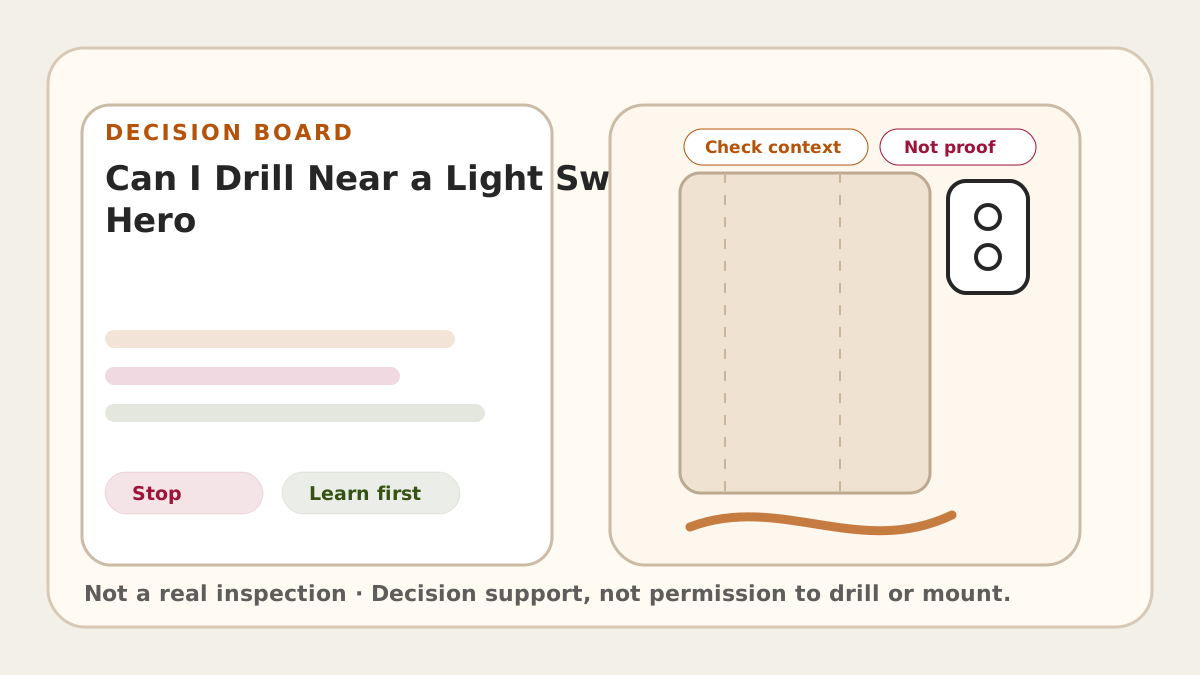
Illustrated wall switch caution board showing nearby drilling as a stop-or-ask decision.

Decision summary

Decision-first check

A light switch is a strong clue that wiring may be nearby, but the visible switch does not tell you the exact path. If the planned hole is close to a switch, the wall is unknown, or the object has any meaningful failure consequence, do not rely on guesswork.

Best for

  • Readers deciding whether an outlet or switch-adjacent area should move to stop, learn-first, or ask.
  • Low-consequence layout questions where wall/device context still needs a conservative check.

Not for

  • Electrical work, hidden-wiring location, cover removal, device-box probing, or any task needing qualified trade review.
  • Heavy, overhead, wet, damaged, or unknown wall conditions.

What can go wrong

  • A hidden-service strike, wall damage, false confidence from distance, or a high-consequence object in the wrong place.

Primary next action

Before You Drill Into a Wall: Beginner Checklist

A stop-first checklist for wall type, placement, fastener choice, and measurement before making the first hole.

Use this as a planning step before buying or drilling.

Open checklist

Quick path

Check, read, then stop or ask when the lane is unclear.

What to check first

  • Start with: Readers deciding whether an outlet or switch-adjacent area should move to stop, learn-first, or ask.
  • Watch for: A hidden-service strike, wall damage, false confidence from distance, or a high-consequence object in the wrong place.

What to read next

  • Checklist: Before You Drill Into a Wall: Beginner Checklist
  • Related guide: Before You Drill Into a Wall: Beginner Checklist

When to stop or ask

  • Stop when Stop near switches when the wall is unknown, scanner readings conflict, the job is heavy or overhead, the area is wet/damaged, or the reader is trying to confirm wiring location without qualified review.
Short answer

A switch nearby means slow down. It is not enough to eyeball the wall and drill beside it.

Why switches create hidden-risk uncertainty

Explain that switch wiring can enter from different directions and may be affected by wall construction and remodel history.

When a different location is the best decision

Encourage moving the object if the hole is optional and the switch-adjacent area is avoidable.

What a scanner can and cannot do

Frame scanners as clues; alerts and inconsistent readings are reasons to stop, not solve.

Decision lanes

Learn first for low-consequence and avoidable work; prep first for photos/measurements; stop/ask when electrical risk remains.

Stop rules

Stop when Stop near switches when the wall is unknown, scanner readings conflict, the job is heavy or overhead, the area is wet/damaged, or the reader is trying to confirm wiring location without qualified review.

Review-only checklist

Planning checklist for this decision

Use these to organize the next decision. They do not approve drilling, mounting, patching, painting, lease decisions, or product choices.

Evidence: researched

Use the hidden-service pre-check

For outlets, switches, plumbing-adjacent walls, exterior walls, heat sources, or utility clues. It does not locate hidden services.

Next step

Related guides and checklists

toolsstud-finders

Stud Finder Beeping Everywhere? False Positives Before You Drill

A stud finder reading is a clue, not drilling clearance. Learn when inconsistent readings across repeated scans, broad alerts, or model-specific warnings mean stop, check the wall and room context, and reassess.

Visual notes

Helpful reference images

Illustrated wall switch caution board showing nearby drilling as a stop-or-ask decision.
A switch nearby raises the caution level. The visual shows uncertainty, not the actual wire path. It is decision support, not permission to drill or mount.
Source and rights: original-code SVG details
Project-created original-code SVG decision visual only; not a real photo, product test, service claim, hidden-condition proof, or permission to drill or mount.Credit: Original SVG visual created for Before You Drill.License/permission: Before You Drill original-code visual rights note
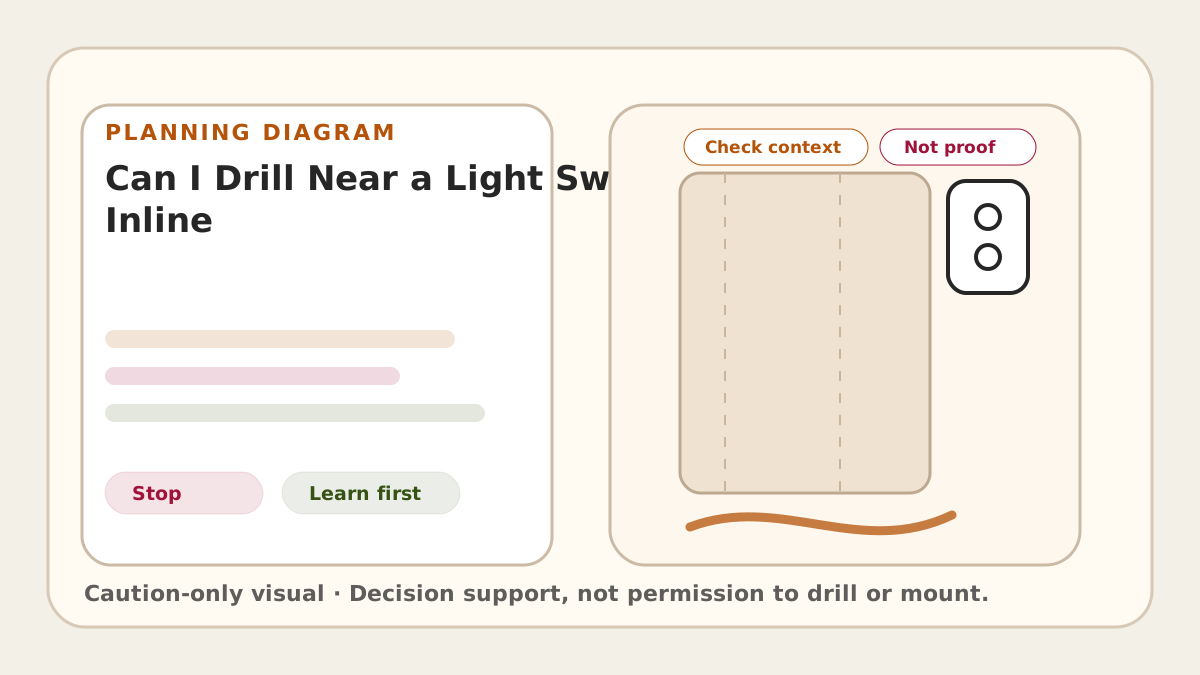
Diagram showing a light switch area with uncertainty bands and a reminder not to treat the image as a wiring map.
If the route behind the switch is unclear, stop before drilling and ask for qualified guidance. It is a planning aid, not permission to drill or mount.
Source and rights: original-code SVG details
Project-created original-code SVG diagram only; not a real photo, product test, service claim, hidden-condition proof, or permission to drill or mount.Credit: Original SVG visual created for Before You Drill.License/permission: Before You Drill original-code visual rights note

Method notes

What was tested

  • No hands-on testing, jobsite inspection, product ranking, service estimate, or repair-outcome proof is claimed for this P2-345F local content batch.

What was researched

  • This page should use conservative electrical safety references and avoid code-specific installation claims unless sourced and reviewed.
See editorial standards

Conservative boundary

Conservative boundary

  • Stop when Stop near switches when the wall is unknown, scanner readings conflict, the job is heavy or overhead, the area is wet/damaged, or the reader is trying to confirm wiring location without qualified review.