Evidence note
Evidence note: This article is researched from manufacturer instructions and safety references. Before You Drill has not performed product testing or jobsite verification for this guide.
Quick decision path
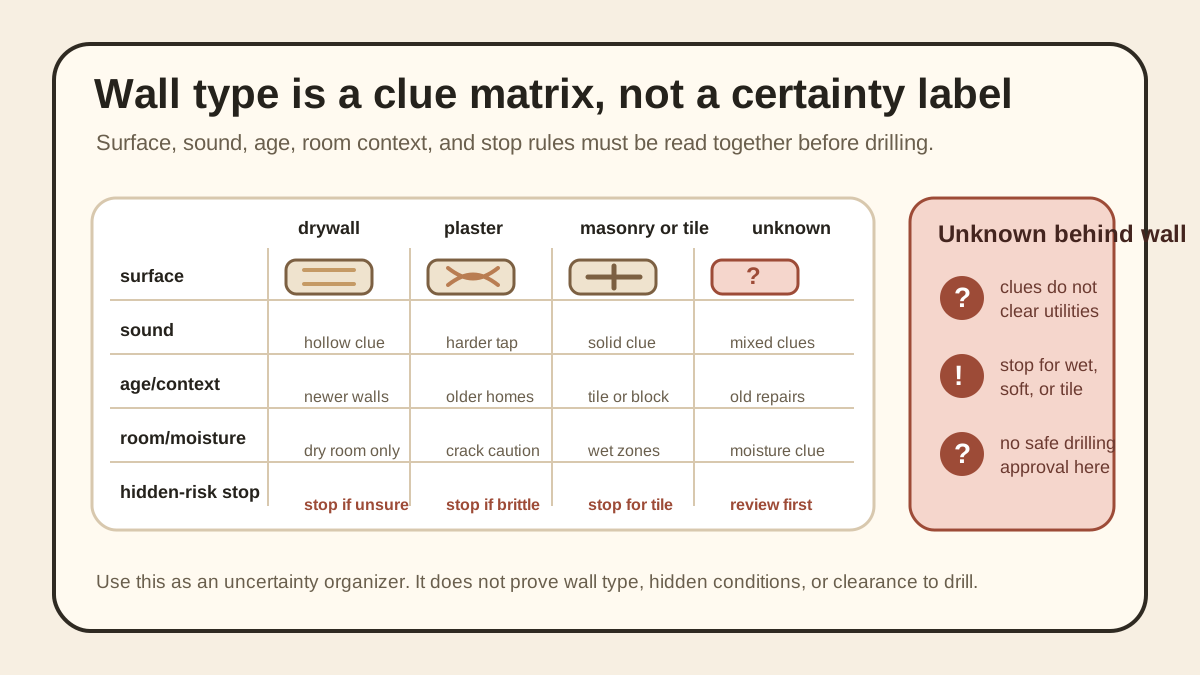
Visible clues can help you decide what to learn next, but they do not confirm wall type or clear a drilling location. If the wall seems wet, damaged, tiled, masonry, layered, or unknown—or the job could have serious consequences—stop before choosing an anchor.
Use clues to choose a safer next step
A painted surface can still be drywall, plaster, masonry, tile over another layer, or a mixed repair; one clue is not confirmation.
Wet, soft, stained, damaged, or mold-suspect walls are stop conditions, not anchor-shopping signals.
Near utilities, tile or waterproofed areas, or with a heavy or high-consequence object, stop and seek the right qualified help if the path is unclear.
Why wall type comes before anchor choice
Before you buy anchors or choose a drill bit, figure out what kind of wall you are dealing with. Drywall, plaster, masonry, tile, and layered walls do not behave the same way. A fastener that is reasonable in clean drywall may be the wrong choice on plaster, brick, concrete block, tile over another surface, or a wall with old repairs.
The goal is not to identify every wall system from one tap test. The goal is to make a better stop-or-continue decision. If you cannot explain what the wall probably is, what you are hanging, and what happens if it falls, anchor shopping is too early.
The quick scan: surface, sound, age, and room clues
Start with room context. Newer interior walls are often drywall, but older homes and older rentals may include plaster, masonry, furring strips, paneling, tile, or layered repairs. Bathrooms, kitchens, laundry areas, exterior-facing walls, fireplace walls, garage walls, and basement walls deserve extra caution because they are more likely to involve moisture, masonry, utilities, or non-standard layers.
Look at the surface under normal room light and from the side. Drywall often has a painted paper-faced gypsum-board surface with seams and patches hidden under finish. Plaster may feel harder and may be part of an older wall system. Masonry, brick, or concrete block may feel much harder and needs a different fastener decision. Tile adds surface and hidden-layer risk because the tile is only one part of the wall assembly.
Visible clues can help you slow down, but they do not prove a wall is safe to drill. Treat surface, sound, age, and room context as planning clues, not clearance.
No single clue is proof. Use clues together, then decide whether the job is still simple enough.
Drywall clues and limits
Drywall is usually a gypsum board panel with paper faces. On a simple interior wall, drywall can be compatible with drywall anchors, picture hangers, or stud-based mounting, depending on the object and the manufacturer instructions.
That does not mean every painted wall is safe to treat like clean drywall. Patched areas, water-damaged drywall, soft drywall, crumbling edges, old anchor holes, or repeated failed fasteners all change the decision. A drywall anchor depends on the surrounding wall material being sound enough to hold the anchor. If the wall feels weak, damp, chalky, or unstable, do not keep upgrading to a stronger-looking anchor.
For light decor, clean drywall may keep the job in beginner territory. For shelves, mirrors, TVs, cabinets, grab bars, overhead objects, or anything near a bed, child area, desk, or walkway, the decision should move from `which anchor` to `what support is actually required`.
Plaster clues and limits
Plaster can be harder and less predictable for beginners than ordinary drywall. Older plaster walls may include wood lath, metal lath, masonry behind plaster, veneer plaster over gypsum base, or repairs from different eras. A stud finder may behave differently on plaster, and a small hole can chip or crack more than expected.
If the wall feels very hard, the drill bit does not behave like it is entering ordinary drywall, or the surface cracks or crumbles as soon as you touch it, stop and reassess. Do not force drywall anchors into a wall system they were not intended for. For a low-consequence picture, a plaster-appropriate hanger or fastener may be enough, but that decision should come from the product instructions and the actual wall condition, not from drywall habits.
For heavy or safety-sensitive work on plaster, especially old or cracked plaster, treat the wall as a review problem before treating it as a hardware problem.
Masonry, concrete block, brick, and tile clues
Masonry and concrete are not drywall. If the wall is brick, concrete, concrete block, stone, or a very hard exterior-facing wall, ordinary drywall anchors are not the right mental model. Masonry anchors and screws usually require the correct bit, hole depth, dust cleanup, and product-specific instructions.
Tile should also slow the decision down. A tiled bathroom or kitchen wall may include tile over backer board, drywall, plaster, masonry, or another surface. This article does not tell you how to approve drilling through tile or any waterproofed area. If you are not sure what is behind the tile, whether drilling is allowed, or whether the work could affect water management, stop before drilling.
Tile and waterproofed areas add hidden-layer and water-management risk; this article cannot approve drilling there.
Masonry and tile are not automatic `pro only` in every small case, but they are not beginner drywall-anchor jobs either.
Mixed or covered walls: why one clue is not enough
Some walls are layered. You might find drywall over old plaster, plaster over masonry, paneling over drywall, tile over another surface, or a heavily patched area that no longer behaves like the surrounding wall. A stud finder, tap sound, surface clue, or old hole can give one clue while the actual fastener path tells a different story.
Use visible clues only. This guide should not be read as permission to remove outlet covers, touch electrical parts, probe near wiring, or open a wall to investigate. If visible clues do not match your expectation, stop. Do not widen the hole just to make the anchor fit.
What may be behind the wall
Wall type is only one part of the decision. Behind the surface there may be studs, metal, pipes, wiring, gas lines, blocking, insulation, ducting, or old repairs. This article cannot identify those hidden conditions for you. Be extra cautious near outlets, switches, bathrooms, kitchens, laundry areas, utility walls, fireplaces, exterior walls, and any wall with unknown history.
If a stud finder, wall scanner, or other detector gives inconsistent readings, repeated warnings, or alerts near your planned hole, treat that as a reason to stop and reassess. A tool reading is not permission to drill. It is one input in a larger decision.
When anchors are the wrong first question
Anchor choice matters only after the wall, object, and consequence are clear. A lightweight frame on a simple interior wall is different from a floating shelf, a mirror, a TV, a cabinet, a grab bar, or anything overhead.
For heavy, high-consequence, or child-adjacent items, do not use wall-type guessing to justify the project. Manufacturer instructions, verified support, and appropriate qualified help matter more than a stronger-looking fastener.
Stop rules before drilling
Stop before drilling if the wall type is unknown, the wall is wet, soft, stained, mold-suspect, crumbling, repeatedly patched, or moving. Stop if the area may involve hidden electrical, plumbing, gas, water, structural, masonry, tile, or other high-risk wall conditions. Stop if the object is heavy, overhead, above a bed or child area, in a walkway, or otherwise high-consequence.
Stop if you are trying to use a generic article, a package load number, or one tool beep as final approval. A beginner drilling decision should be conservative enough that a mistake is small, visible, and repairable.