repairs / walls
Can I Drill Above an Outlet?
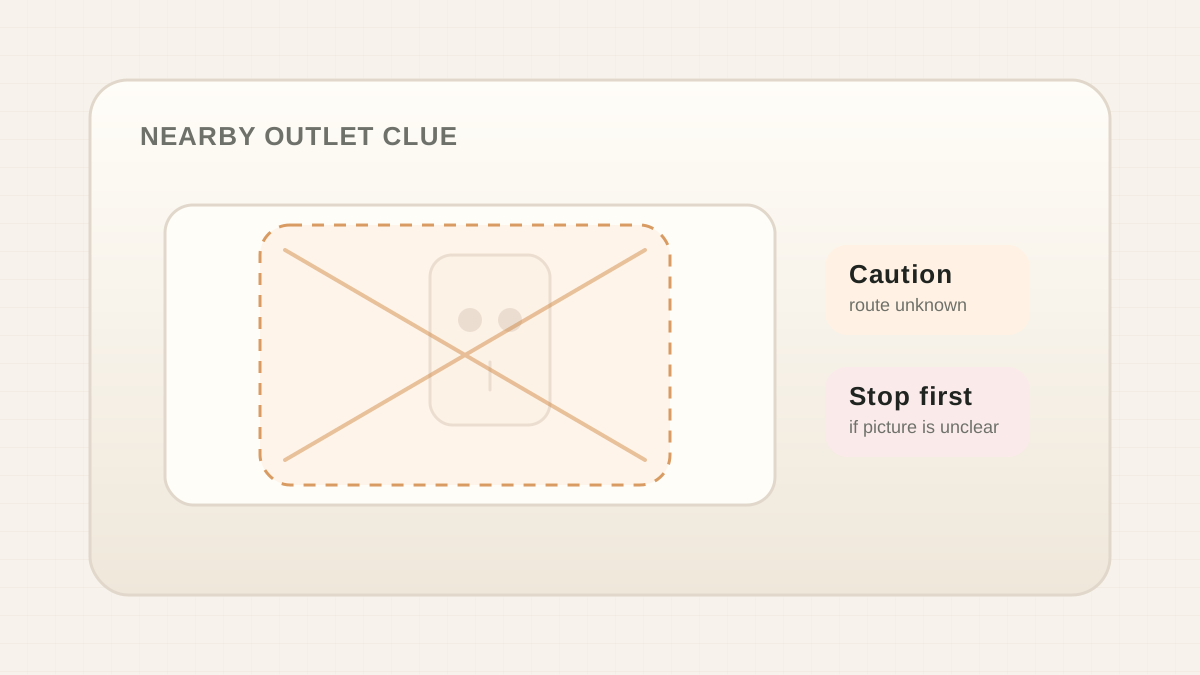
Do not treat the space above an outlet as automatically low-risk. Wiring can run vertically, horizontally, or through nearby framing depending on the wall, age, remodel history, and installation. If the wall area is near electrical devices, use appropriate checks only to reduce uncertainty; if electrical risk still remains, stop and ask instead of drilling.
Risk: highEvidence: researchedsource review
Reviewed: Jun 30, 2026Estimated read: 2 minPlanning note: decision support, not repair approval. Decision summary
Decision-first check
Do not treat the space above an outlet as automatically low-risk. Wiring can run vertically, horizontally, or through nearby framing depending on the wall, age, remodel history, and installation. If the wall area is near electrical devices, use appropriate checks only to reduce uncertainty; if electrical risk still remains, stop and ask instead of drilling.
Best for
- Readers deciding whether an outlet or switch-adjacent area should move to stop, learn-first, or ask.
- Low-consequence layout questions where wall/device context still needs a conservative check.
Not for
- Electrical work, hidden-wiring location, cover removal, device-box probing, or any task needing qualified trade review.
- Heavy, overhead, wet, damaged, or unknown wall conditions.
What can go wrong
- A hidden-service strike, wall damage, false confidence from distance, or a high-consequence object in the wrong place.
Primary next action
Before You Drill Into a Wall: Beginner Checklist
A stop-first checklist for wall type, placement, fastener choice, and measurement before making the first hole.
Use this as a planning step before buying or drilling.
Open checklist
Short answer
State plainly that above an outlet is not automatically a no-go, but it is not a permission zone either. The reader needs wall context, object consequence, and a conservative stop rule.
Why outlet-adjacent drilling is different
Explain that outlets indicate electrical infrastructure may be nearby, and hidden paths are not visible from the paint surface.
What to check before deciding
Cover object weight/consequence, wall condition, wall type, room type, nearby switches/outlets, old patches, scanner alerts, and whether a different location is available.
What not to do
Do not remove outlet covers, touch wiring, insert probes, drill exploratory holes, or assume a distance from a blog is approval.
Decision lanes
Try only for low-consequence work away from electrical clues after checks; learn first for uncertain wall/device layout; prep first for photos/measurements; stop/ask for electrical, wet/damaged, heavy, or hidden-risk conditions.
Stop rules
Stop when the hole would be near an outlet, switch, device box, wet wall, bathroom/kitchen utility wall, old repair, scanner alert, metal/pipe/wire warning, heavy object, overhead object, child area, walkway, or unknown wall type.