repairs / tv-mounting
Can You Mount a TV Yourself?
A decision-first guide to whether TV mounting is a reasonable DIY task based on wall type, bracket method, cable plan, and failure downside.
Quick answer
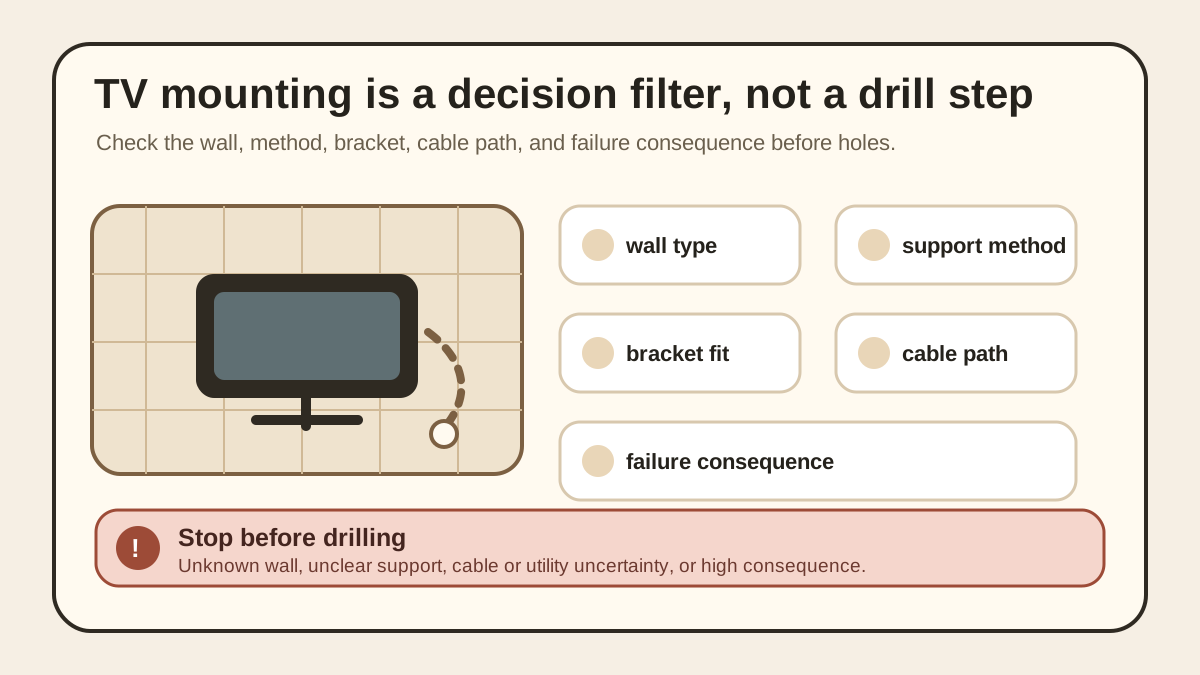
Sometimes, but only when the wall, bracket method, cable plan, and downside of failure are all clear before drilling starts.
Best for
- readers deciding whether to mount or stop
- pre-mount planning
- photo and measurement prep
- mount-now versus prepare-first decisions
Who should skip this
- guessing with unknown wall types
- treating strong anchors as a stud replacement
- safety-critical placements without verification
- readers expecting one universal yes-or-no answer
Conservative boundary
When not to DIY
- The wall type is unclear or may include tile, masonry, metal studs, or other unknown conditions.
- The TV is large enough that failure would create injury risk or major damage.
- The mount location is above a bed, in a child area, or anywhere failure would create injury risk.
- You do not have a safe plan for lifting, aligning, and fastening.
Conservative boundary
Stop here if...
- You are using internet confidence to replace real wall information.
- The mount location is above a bed, in a walkway, or otherwise high-consequence.
- The cable plan, bracket instructions, or stud reality no longer feels straightforward.
- You are starting to use 'strong anchors' as a shortcut around a safety decision.
The 5-question DIY filter
Do you know the wall type?
Do you know whether studs and bracket instructions require specific fastening conditions?
Do you have a safe way to lift, hold, and align the TV?
Would failure be mostly cosmetic or genuinely dangerous?
Can you explain your cable plan before drilling?
When DIY may be reasonable
The wall condition is understood, the fastener method is verified, the bracket path is clear, and the downside of a mistake is low enough to accept.
The reader has already done the measuring, photo prep, and stop-rule checks instead of improvising mid-install.
When to stop before drilling
Unknown wall type, unclear stud path, high-consequence placement, and cable complexity should move this out of casual DIY territory.
A photo-based review is often more useful than buying more hardware when the real blocker is uncertainty.
Wall type and mounting reality check
Drywall is not a complete answer. Wall condition, stud reality, and bracket instructions all matter at the same time.
Anchors are not a substitute for judgment, especially when failure would injure someone or create expensive damage.
TV size, bracket, and cable-planning questions
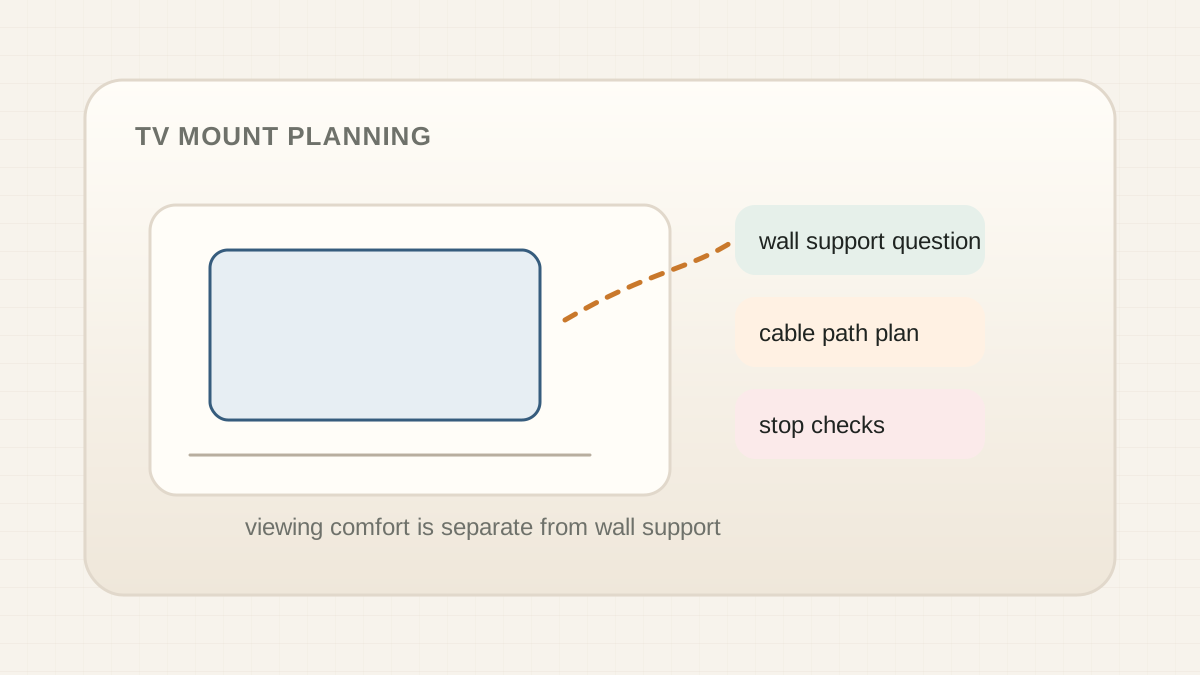
Check viewing comfort, centerline, room clearance, outlet position, and cable path before the first hole, not after the bracket location feels visually right.
This is the Fix and Finish angle that matters here: cleaner cable planning and balanced placement help prevent avoidable rework.
If you stop here, what to prepare before asking for help
Gather a room-wide photo, a straight-on wall photo, bracket and TV label photos, and one or two measurement photos.
Write down what you know about the wall, what still feels uncertain, and why the placement matters before you hand the job off for review.
Common mistakes that create bigger repairs
Planning around where the TV looks good but not where the wall supports it safely.
Treating anchors as a shortcut around uncertainty.
Starting without a cable route, outlet plan, or realistic patching fallback.
What can go wrong
- Bad hole placement leads to more patching and still does not solve the mounting problem.
- Anchor-first thinking replaces proper bracket and wall review.
- You solve placement visually but not structurally.
- The wall plan works on paper, but the cable path or outlet reality creates a second avoidable compromise.
What this is based on
- Conservative TV mounting decision branches.
- Risk boundaries around wall type, stud use, and failure consequence.
Checklist support
Keep the decision path concrete
Checklist
Before You Drill Into a Wall: Beginner Checklist
A stop-first checklist for wall type, placement, fastener choice, and measurement before making the first hole.
Checklist
TV Mounting Photo Prep Checklist
The room, wall, bracket, and measurement photos that improve a mounting review before anyone drills.
Planning helper
Check TV viewing height before you commit to the wall.
Use the TV mount height calculator to compare screen size, eye height, viewing distance, and how people sit in the room before you choose a centerline. It is a comfort-planning helper, not structural approval, installation approval, a quote, or permit and code advice.
Next step
Related guides and checklists
TV Mounting Photos to Take Before Asking for Help
A practical checklist of the room, wall, bracket, TV, and measurement photos that make a mounting review easier before anyone drills.
Drywall Anchors Explained for Beginners
A beginner-friendly guide to anchor types, wall risk, common failure modes, and when a stud matters more than the anchor.
What Tools Should a Renter Actually Own?
A realistic renter tool list for common setup, hanging, assembly, and touch-up jobs without overbuying gear.