Start with the object, not the anchor package
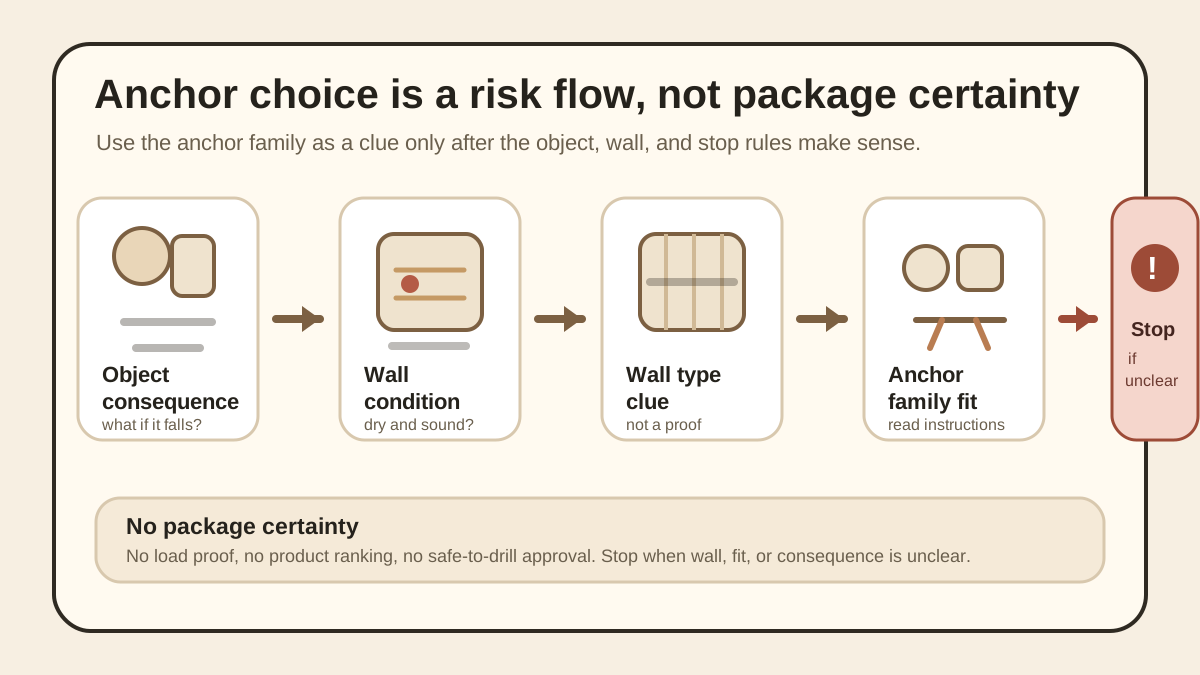
The first decision is not which anchor looks strongest. It is what you are hanging, where it will sit, and what happens if it fails.
Light decor, a small frame, a towel hook, a shelf, and a TV are not the same risk. The heavier or more consequential the object is, the less you should rely on generic anchor advice.
Anchor choice is a consequence decision
A small frame and a high shelf do not fail the same way. Before comparing anchor families, name the object, where it sits, who or what is below it, and whether failure would be only cosmetic or could injure someone or damage property.
If the object is overhead, above a bed, near a walkway, in a child area, or important enough that a fall would be more than a small cosmetic problem, move from anchor shopping to support verification.
Verify the wall before comparing anchors
Drywall anchors are meant for drywall conditions that match the anchor instructions. Plaster, tile, masonry, damaged drywall, wet drywall, or a repeatedly patched area can change the whole decision.
If you cannot tell what the wall is, stop before shopping. Wall type and wall condition matter as much as the anchor category.
A plain-English anchor comparison
This comparison is a planning overview, not a load table. The same anchor family can behave differently when the product, screw, wall thickness, hole quality, cavity clearance, or object changes.
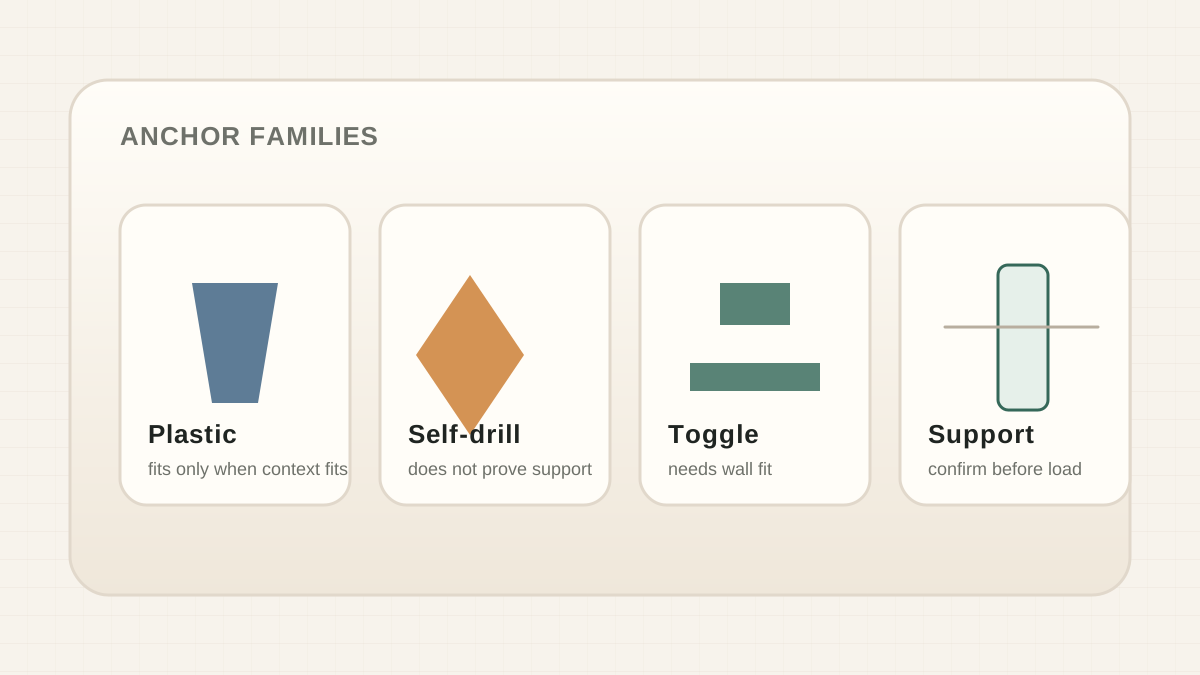
Plastic expansion anchors are common for lighter wall tasks, but they can be overtrusted because they look simple and familiar.
Self-drilling anchors can be convenient in the right drywall condition, but they still depend on clean installation and sound material.
Toggle bolts and molly-style anchors can help when the wall cavity and job fit the design, but they usually make larger holes and still do not turn a high-consequence mount into a casual project.
Beginner anchor decision matrix
Known dry, sound drywall with light decor can move to simple anchor-family comparison and exact product instructions.
Heavy, overhead, child-adjacent, walkway-adjacent, or valuable objects should move to support verification before any anchor decision.
Wet, soft, mold-suspect, crumbling, repeatedly patched, tile, masonry, plaster, or unknown walls should move to wall-type or wall-condition review instead of stronger-looking hardware.
If an anchor spins, pulls out, tears paper, or leaves a sloppy hole, treat that as wall-condition information. Do not simply size up and drill again in the same spot.
Plastic expansion anchors: best for low-consequence jobs
Plastic expansion anchors are usually a low-consequence category for light items when the wall is sound and the product instructions fit the job.
They are a poor mental shortcut for heavy shelves, TVs, grab bars, overhead loads, or anything where failure could injure someone or damage property.
Self-drilling anchors: convenient but not magic
Self-drilling anchors can reduce a step for some drywall jobs, but they still need the right wall condition, correct installation, and a realistic load.
If the wall crumbles, the hole gets sloppy, or the anchor spins instead of seating cleanly, stop. Forcing the anchor usually makes the repair harder.
Toggle and molly-style anchors: stronger-looking does not mean risk-free
Toggle and molly-style anchors can spread load differently than simple plastic anchors, which is why they are often considered for more demanding wall tasks.
The tradeoff is that they need the right cavity, enough clearance, careful installation, and usually a larger hole. They also do not solve weak drywall, unknown wall material, or high-consequence placement.
What the package can tell you, and what it cannot
The package can tell you compatible surfaces, screw or drill requirements, wall-thickness assumptions, cavity needs, load direction, and warnings for that specific product.
It cannot tell you whether your wall is dry and sound, whether hidden services are nearby, or whether the object belongs on drywall anchors at all.
Package load ratings are not blanket permission
Anchor ratings depend on the exact product, wall material, installation, load direction, wall condition, and manufacturer instructions. A number on a package is not the same as approval for your wall.
Treat a listed rating as conditional on the exact product, wall, fastener, installation, and object instructions. Do not transfer one product's number to another anchor, another wall, or a high-consequence object.
Treat any listed load rating as manufacturer-specific and conditional: it applies only within that product's instructions and should not be read as universal permission for your wall or object.
When the wall condition overrides the anchor type
A clean-looking anchor family does not override wall condition. Wet, soft, stained, crumbling, repeatedly patched, or unknown wall material can invalidate the assumptions behind the product instructions.
If the wall is plaster, tile, masonry, layered, or simply not clear to you, solve the wall-type question before choosing a drywall anchor.
When a stud matters more than an anchor
For heavy, wide, overhead, child-adjacent, walkway-adjacent, or safety-sensitive objects, the decision should move from anchor shopping to support verification.
A stud, manufacturer mounting instructions, bracket requirements, and qualified judgment can matter more than finding a stronger-looking drywall anchor.
Stop rules before drilling
Stop if the wall type is unknown, the wall is wet or damaged, the object is heavy or safety-sensitive, the manufacturer instructions are missing, or the fastener choice is based only on an online load number.
If the wall is wet, soft, mold-suspect, damaged, unknown, or near hidden-service risk, stop before choosing an anchor.
Stop for TVs, cabinets, grab bars, ceiling loads, tile, masonry, crumbling drywall, suspected wiring or plumbing, or any situation where failure would be more than a small cosmetic problem.