fix-finish / paint-touch-up-design

Why Does Touch-Up Paint Flash?

Touch-up paint can flash because color, sheen, wall texture, applicator, paint age, surface porosity, lighting, and patch material do not match the surrounding wall. A close color is not the same as an invisible repair.

Illustrated touch-up paint flash board showing sheen, side light, patch edge, texture, applicator, wall age, and viewing angle.

Decision summary

Decision-first check

Touch-up paint can flash because color, sheen, wall texture, applicator, paint age, surface porosity, lighting, and patch material do not match the surrounding wall. A close color is not the same as an invisible repair.

Best for

  • Readers deciding whether a small hole or touch-up is cosmetic, visible, or a stop-and-reassess repair.
  • Move-out or light finish planning where result visibility matters.

Not for

  • Promised finish matching, deposit/landlord outcome promises, or hiding damage.
  • Wet, mold-suspect, soft, spreading, structural, electrical, or plumbing-related damage.

What can go wrong

  • A small repair can flash, shrink, stay visible, widen damaged paper, or reveal moisture or wall-condition problems.

Primary next action

Move-Out Touch-Up Review Checklist

A cautious move-out checklist for sorting small cosmetic touch-ups from documentation, lease/deposit questions, and non-cosmetic stop conditions.

Use this as a planning step before buying or drilling.

Open checklist

Quick path

Check, read, then stop or ask when the lane is unclear.

What to check first

  • Start with: Readers deciding whether a small hole or touch-up is cosmetic, visible, or a stop-and-reassess repair.
  • Watch for: A small repair can flash, shrink, stay visible, widen damaged paper, or reveal moisture or wall-condition problems.

What to read next

  • Checklist: Move-Out Touch-Up Review Checklist
  • Related guide: Touch-Up Paint Rarely Matches: What to Know Before Trying

When to stop or ask

  • Stop when wet/mold-suspect/damaged wall, unknown paint, high-visibility wall where mismatch matters, tight move-out timing, or any attempt to hide damage.

Quick answer

Flashing happens when the repaired spot reflects light differently or has different texture/absorption.

Color is only one factor

Explain color, sheen, texture, applicator, age, and surface prep.

Patch material and primer

Keep cautious; product label and surface condition drive the finish decision.

Lighting changes the result

Side light, windows, hallways, and glossy surfaces can reveal mismatch.

Decision options

Leave alone, document, test a small low-visibility spot, repaint a larger section, or ask.

Move-out boundary

Physical visibility advice only; no deposit or landlord-acceptance promise.

Stop rules

Stop when wet/mold-suspect/damaged wall, unknown paint, high-visibility wall where mismatch matters, tight move-out timing, or any attempt to hide damage.

Review-only checklist

Planning checklist for this decision

Use these to organize the next decision. They do not approve drilling, mounting, patching, painting, lease decisions, or product choices.

Next step

Related guides and checklists

Visual notes

Helpful reference images

Illustrated touch-up paint flash board showing sheen, side light, patch edge, texture, applicator, wall age, and viewing angle.
Paint flash can happen even when the color seems close because sheen, texture, patch edge, age, and light interact. It is decision support, not permission to drill or mount.
Source and rights: original-code SVG details
Project-created original-code SVG decision visual only; not a real photo, product test, service claim, hidden-condition proof, or permission to drill or mount.Credit: Original SVG visual created for Before You Drill.License/permission: Before You Drill original-code visual rights note
Diagram showing how side light, sheen, texture, patch edge, and wall age can make touch-up paint flash.
The diagram explains visibility factors; it does not prove a color match or finish result.
Source and rights: original-code SVG details
Project-created original-code SVG diagram only; not a real photo, product test, service claim, hidden-condition proof, or permission to drill or mount.Credit: Original SVG visual created for Before You Drill.License/permission: Before You Drill original-code visual rights note
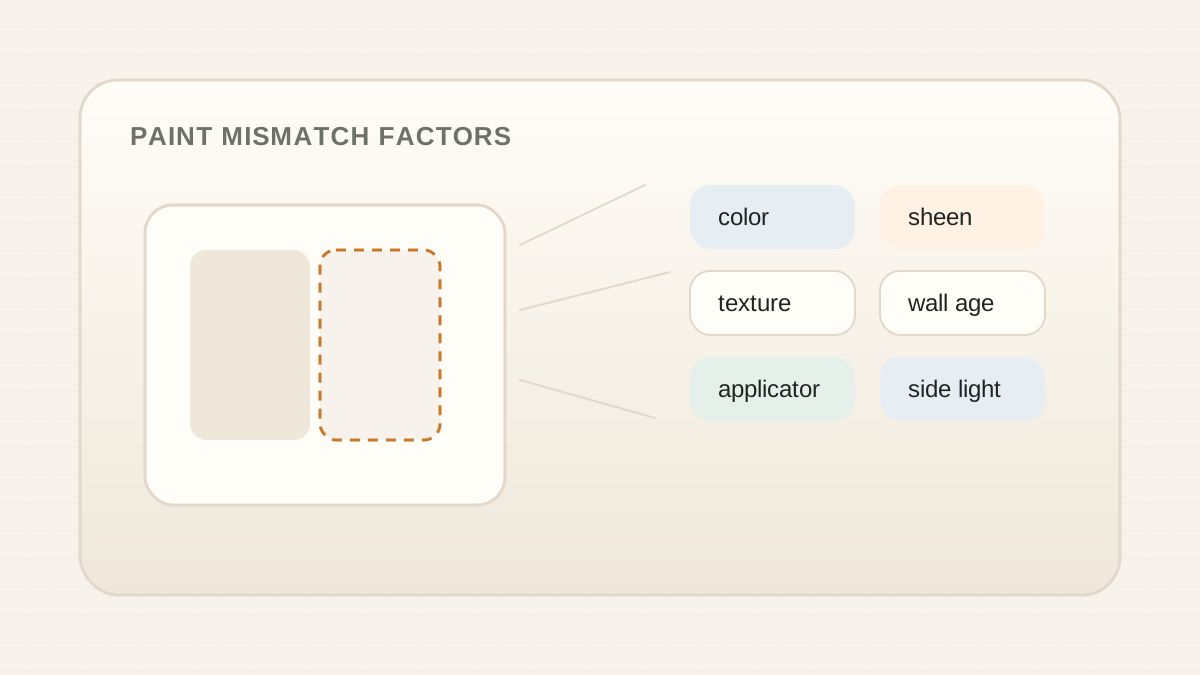
Touch-up paint mismatch factors diagram showing sheen, texture, patch edge, paint age, applicator, and lighting.
Paint flash can come from sheen, texture, patch edge, paint age, applicator, and lighting. The diagram does not promise a finish match.
Source and rights: original-code SVG details
Project-created SVG diagram only; not a real repair photo, product test, service claim, finish-result proof, or qualified inspection.Credit: Original SVG visual created for Before You Drill.License/permission: Before You Drill original-code visual rights note

Method notes

What was tested

  • No hands-on testing, jobsite inspection, product ranking, service estimate, or repair-outcome proof is claimed for this P2-345F local content batch.

What was researched

  • Implementation should source finish/timing claims from paint and primer labels or manufacturer guidance. No paint-match testing is claimed.
See editorial standards

Conservative boundary

Conservative boundary

  • Stop when wet/mold-suspect/damaged wall, unknown paint, high-visibility wall where mismatch matters, tight move-out timing, or any attempt to hide damage.