materials / walls

What Does a Hollow Wall Sound Mean?

A hollow sound can mean many things: drywall cavity, plaster condition, paneling, thin material, a cavity between framing, or simply the way the wall resonates. It does not identify hidden conditions, weak, strong, or safe for anchors.

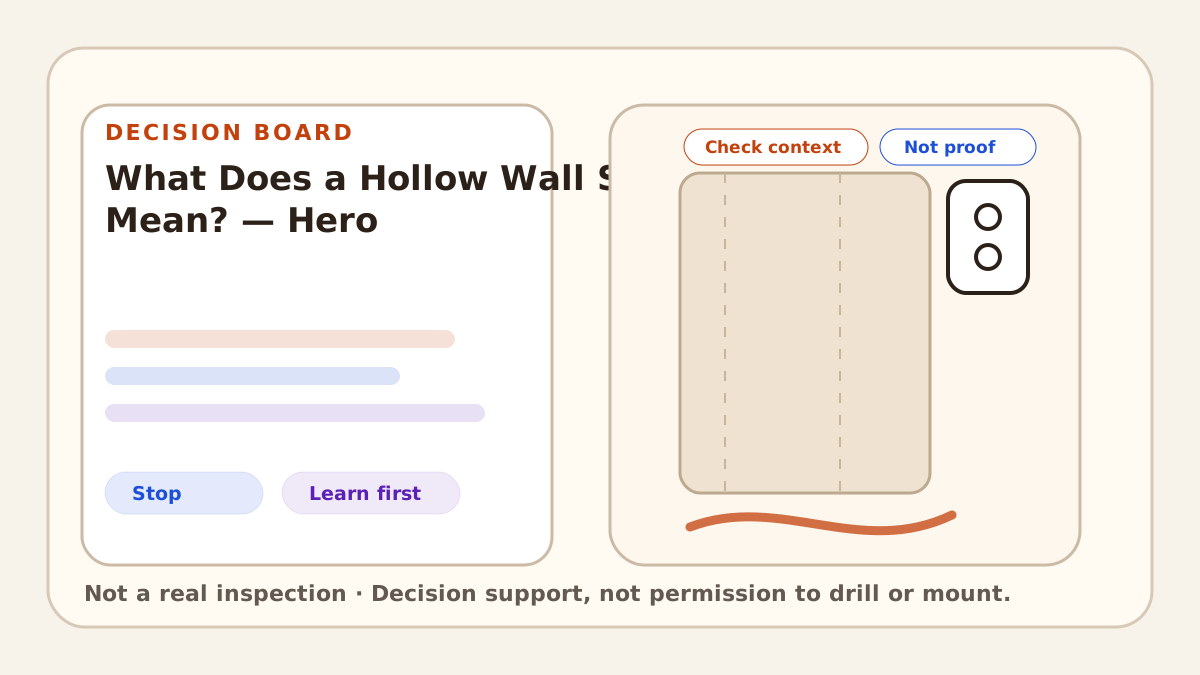
Illustrated wall sound clue board showing hollow sound as one clue, not proof of wall type or support.

Decision summary

Decision-first check

A hollow sound can mean many things: drywall cavity, plaster condition, paneling, thin material, a cavity between framing, or simply the way the wall resonates. It does not identify hidden conditions, weak, strong, or safe for anchors.

Best for

  • Readers sorting wall type, wall condition, object consequence, and stop rules before a first hole.
  • Small mounting or decor tasks that still need a pre-drill lane.

Not for

  • Hidden-service locating, structural assessment, wet or damaged wall work, or high-consequence mounting.
  • Using one wall clue as permission to drill.

What can go wrong

  • The wall type can be misread, scanner clues can conflict, anchors can be mismatched, or wall damage can turn a small job into a stop decision.

Primary next action

Before You Drill Into a Wall: Beginner Checklist

A stop-first checklist for wall type, placement, fastener choice, and measurement before making the first hole.

Use this as a planning step before buying or drilling.

Open checklist

Quick path

Check, read, then stop or ask when the lane is unclear.

What to check first

  • Start with: Readers sorting wall type, wall condition, object consequence, and stop rules before a first hole.
  • Watch for: The wall type can be misread, scanner clues can conflict, anchors can be mismatched, or wall damage can turn a small job into a stop decision.

What to read next

  • Checklist: Before You Drill Into a Wall: Beginner Checklist
  • Related guide: How to Tell What Kind of Wall You Have Before Drilling

When to stop or ask

  • Stop when hollow sound appears with wall movement, cracking, moisture, soft spots, bulging, repeated patches, electrical/plumbing/gas risk, or high-consequence mounting.
Quick answer

Hollow sound alone is not enough information.

Possible meanings

Keep broad and non-diagnostic: cavity, drywall behavior, plaster/lath, paneling, layered wall, damaged area.

What to compare it with

Surface condition, room type, age, cracks, moisture, previous holes, scanner behavior, object consequence.

When hollow sound is lower concern

Low-consequence decor after other checks are clear.

When hollow sound is a stop signal

Hollow plus movement, cracks, wetness, crumbling, utility proximity, heavy object, tile/masonry uncertainty.

Stop rules

Stop when hollow sound appears with wall movement, cracking, moisture, soft spots, bulging, repeated patches, electrical/plumbing/gas risk, or high-consequence mounting.

Next step

Related guides and checklists

materialswalls

Drywall vs Plaster Before Drilling

Drywall and plaster can look similar after paint, but they behave differently when drilled, anchored, scanned, or patched. The goal is not perfect diagnosis from one clue; it is deciding whether the job stays simple or moves to learn-first/ask.

Visual notes

Helpful reference images

Illustrated wall sound clue board showing hollow sound as one clue, not proof of wall type or support.
A hollow sound can be useful, but it does not confirm support, wall type, or hidden conditions.
Source and rights: original-code SVG details
Project-created original-code SVG decision visual only; not a real photo, product test, service claim, hidden-condition proof, or permission to drill or mount.Credit: Original SVG visual created for Before You Drill.License/permission: Before You Drill original-code visual rights note
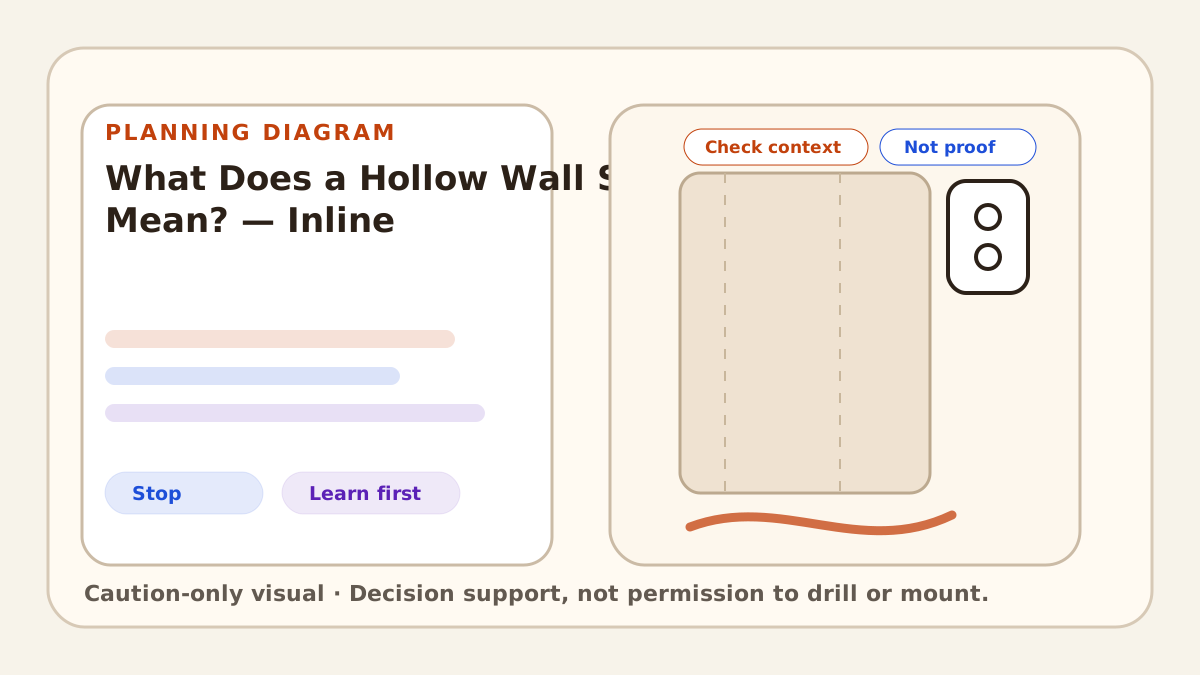
Decision tree showing how a hollow wall sound should lead to more wall-type, risk, and stop-rule checks.
Use sound as the start of a decision path, not the final answer. It is a planning aid, not permission to drill or mount.
Source and rights: original-code SVG details
Project-created original-code SVG diagram only; not a real photo, product test, service claim, hidden-condition proof, or permission to drill or mount.Credit: Original SVG visual created for Before You Drill.License/permission: Before You Drill original-code visual rights note

Method notes

What was tested

  • No hands-on testing, jobsite inspection, product ranking, service estimate, or repair-outcome proof is claimed for this P2-345F local content batch.

What was researched

  • Use researched wall-clue framing; do not claim acoustic diagnosis or hidden-condition uncertainty reduction.
See editorial standards

Conservative boundary

Conservative boundary

  • Stop when hollow sound appears with wall movement, cracking, moisture, soft spots, bulging, repeated patches, electrical/plumbing/gas risk, or high-consequence mounting.